Meta - Reality Labs (2023 onwards)
Product design lead, Horizon
*Only snippets can be shared below, please contact me for more information.
I lead design & strategy around novel user experiences & interaction paradigms within Mixed Reality hardware & mobile phones.
My work shapes how millions of people experience live music, concerts, and social events in mixed reality on Quest and mobile. It is aided by a constant user focus & rapid 2D/3D prototyping (both with and without AI) - with a healthy dose of service design thinking.
Two projects mentioned below…
My team and I currently work on a key Reality Labs experiment and product called Events.
Previously, I worked on interactions for a Meetings and Collaboration tool for VR/AR called Workrooms, including B2B & 3rd party integrations.
〰️
Only snippets shown below, contact me for more info
〰️ Only snippets shown below, contact me for more info
Project 1/2 : MR Events
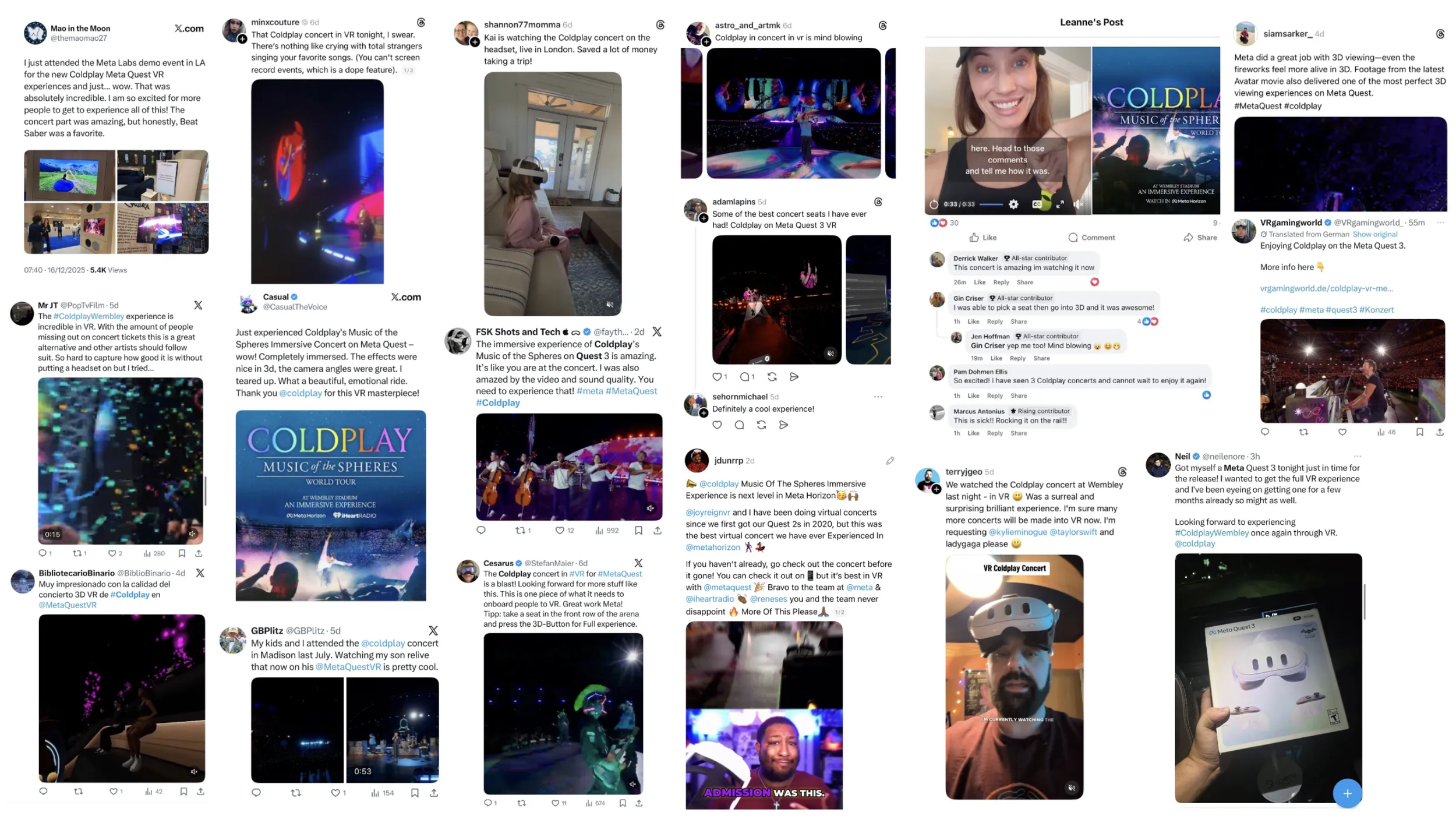
As Design Lead, I drive the 0→1 strategy and execution for novel music experiences on Quest mixed reality hardware & mobile devices — featuring headline acts including Coldplay, Sabrina Carpenter and Arcade Fire, amongst many others seen in 3D immersive worlds.
VR and AR experiences hold tremendous potential for delivering next-level immersion, social connection, escapism, and accessibility. Beyond that, they generate crucial data points that will shape the future of spatial AI systems.
A core challenge has been the design & prototyping of Spatial interactions that works across fundamentally different contexts: immersive 3D arenas and flat-screen mobile surfaces.
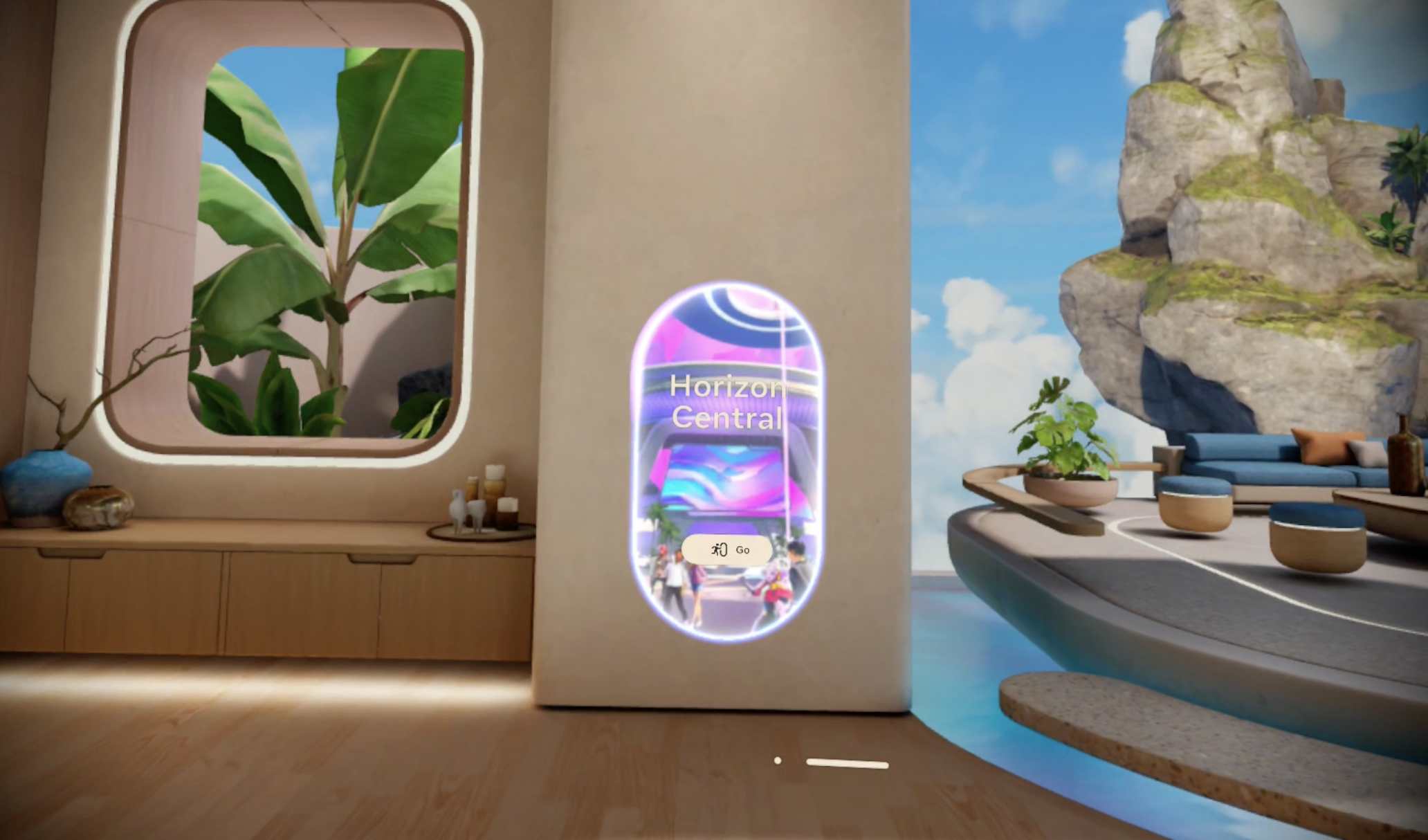
I define how users navigate, orient & learn, and comfortably engage in activities within VR/AR environments — solving for spatial wayfinding, shared presence at scale, and consistent end-to-end discovery across Horizon Worlds and Horizon OS.
Accessibility and user advocacy are central to every decision, balanced against business priorities spanning multiple cross-functional teams.
My work is driven by constant user research and rapid 2D/3D prototyping — with and without AI — combined with a service design lens that keeps the full end-to-end experience in view.
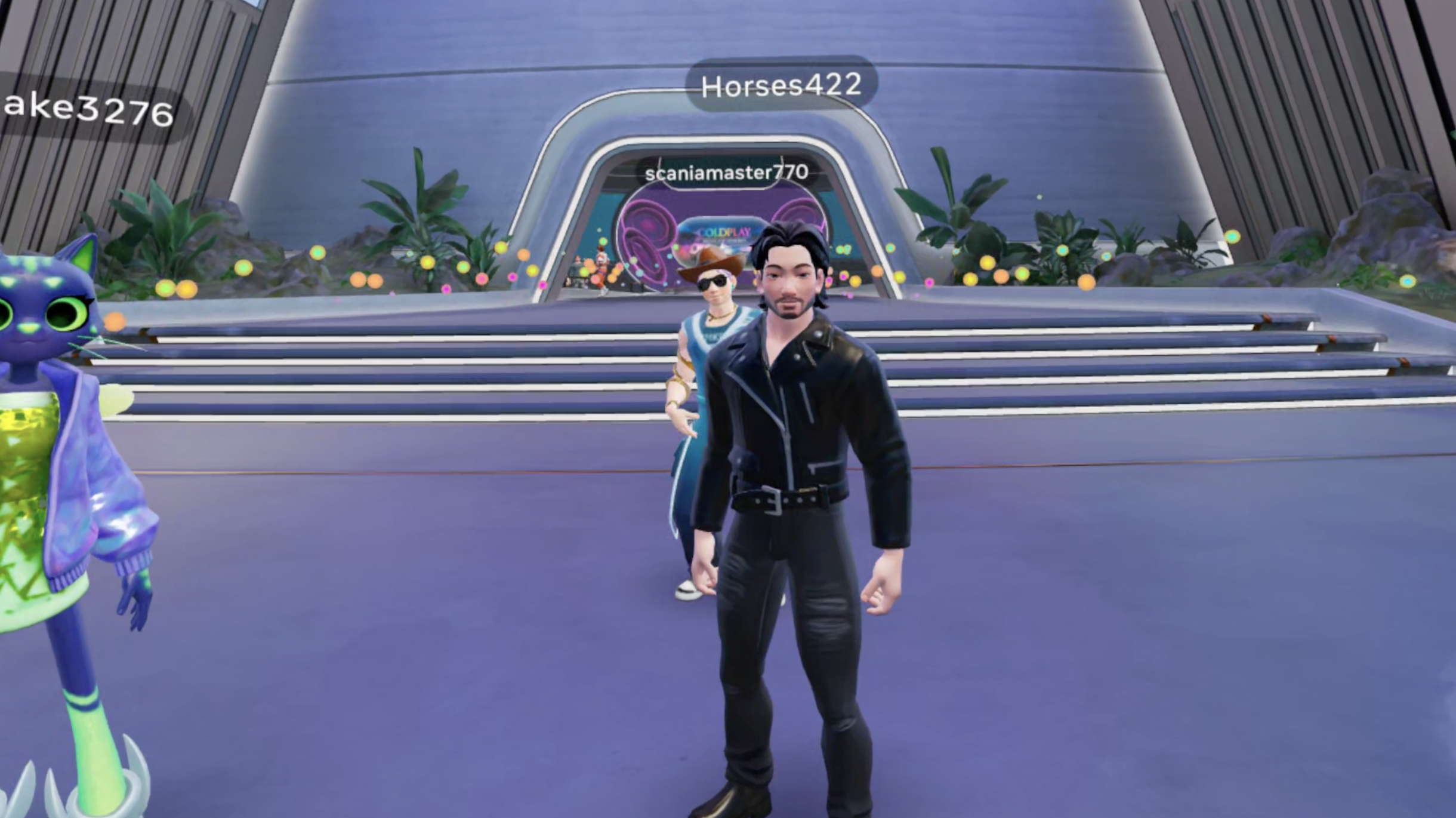
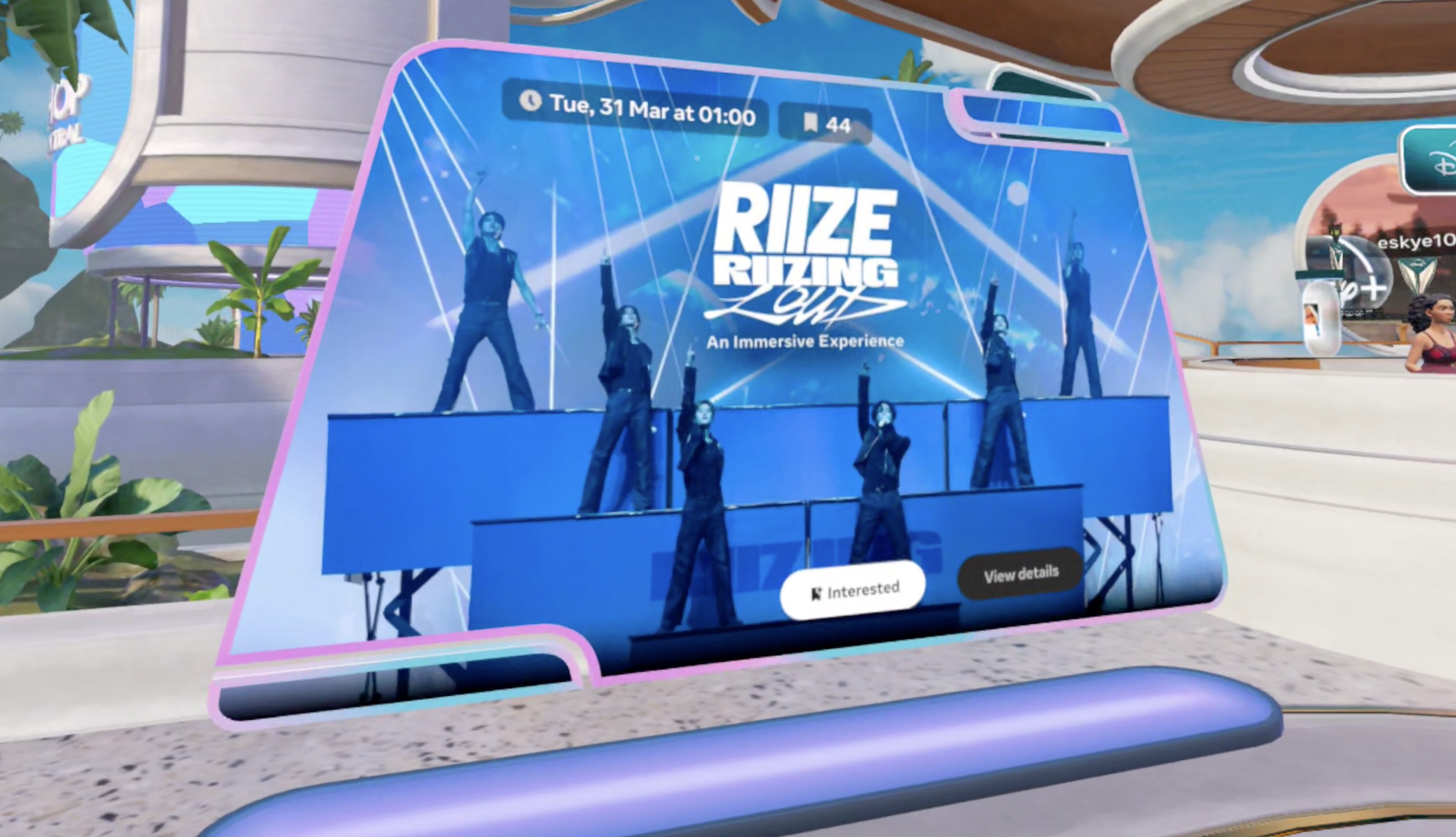
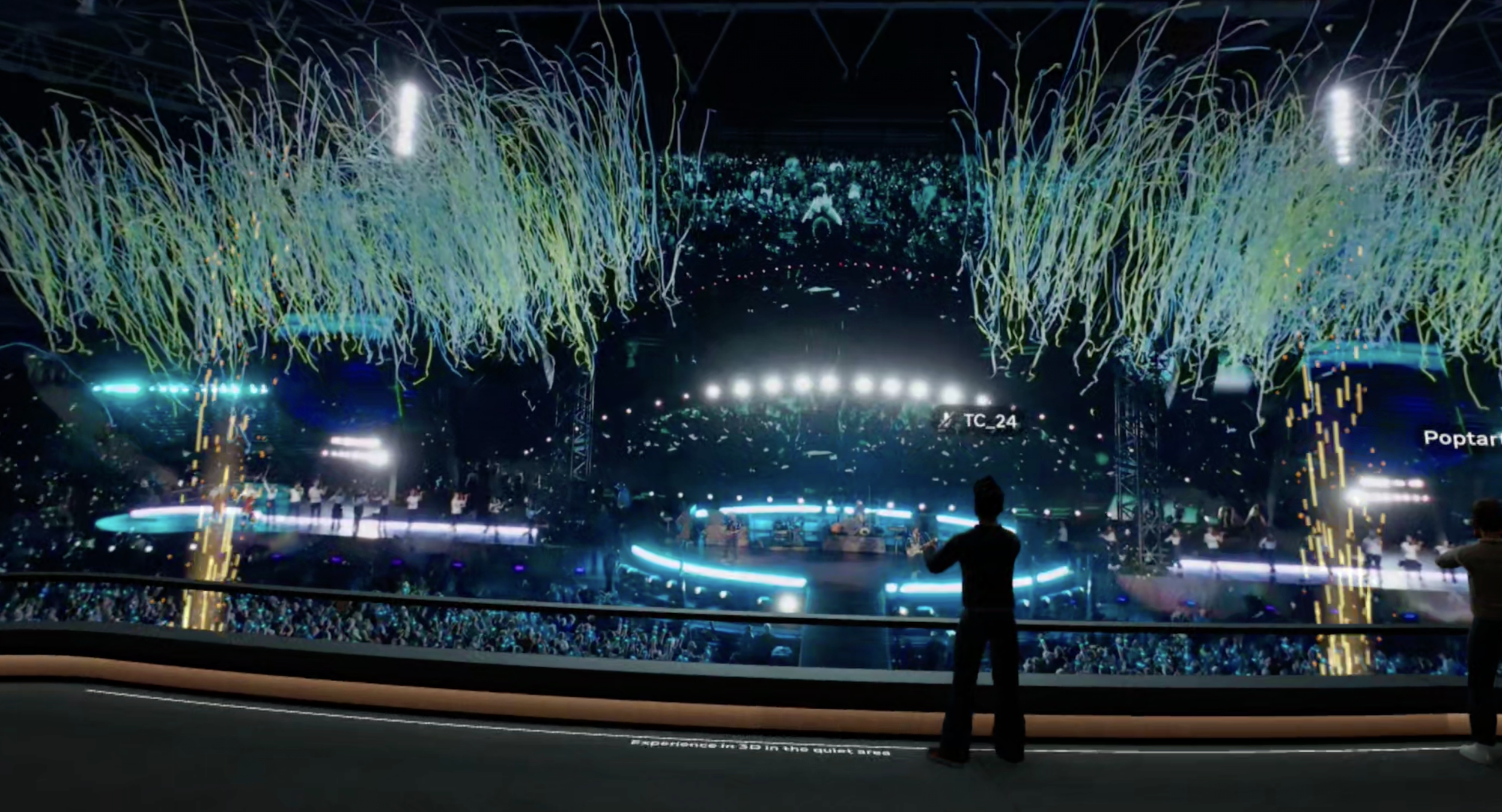
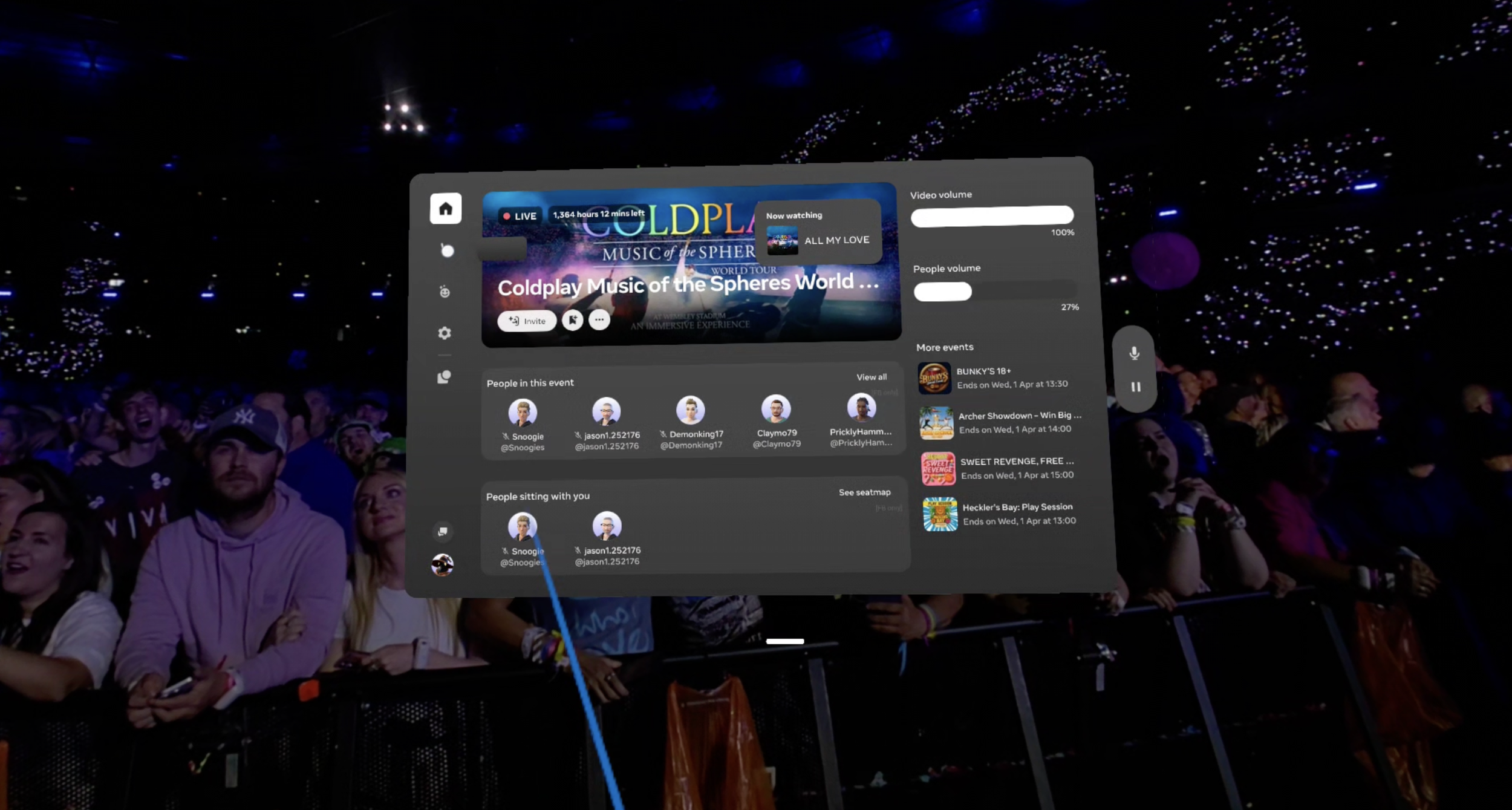
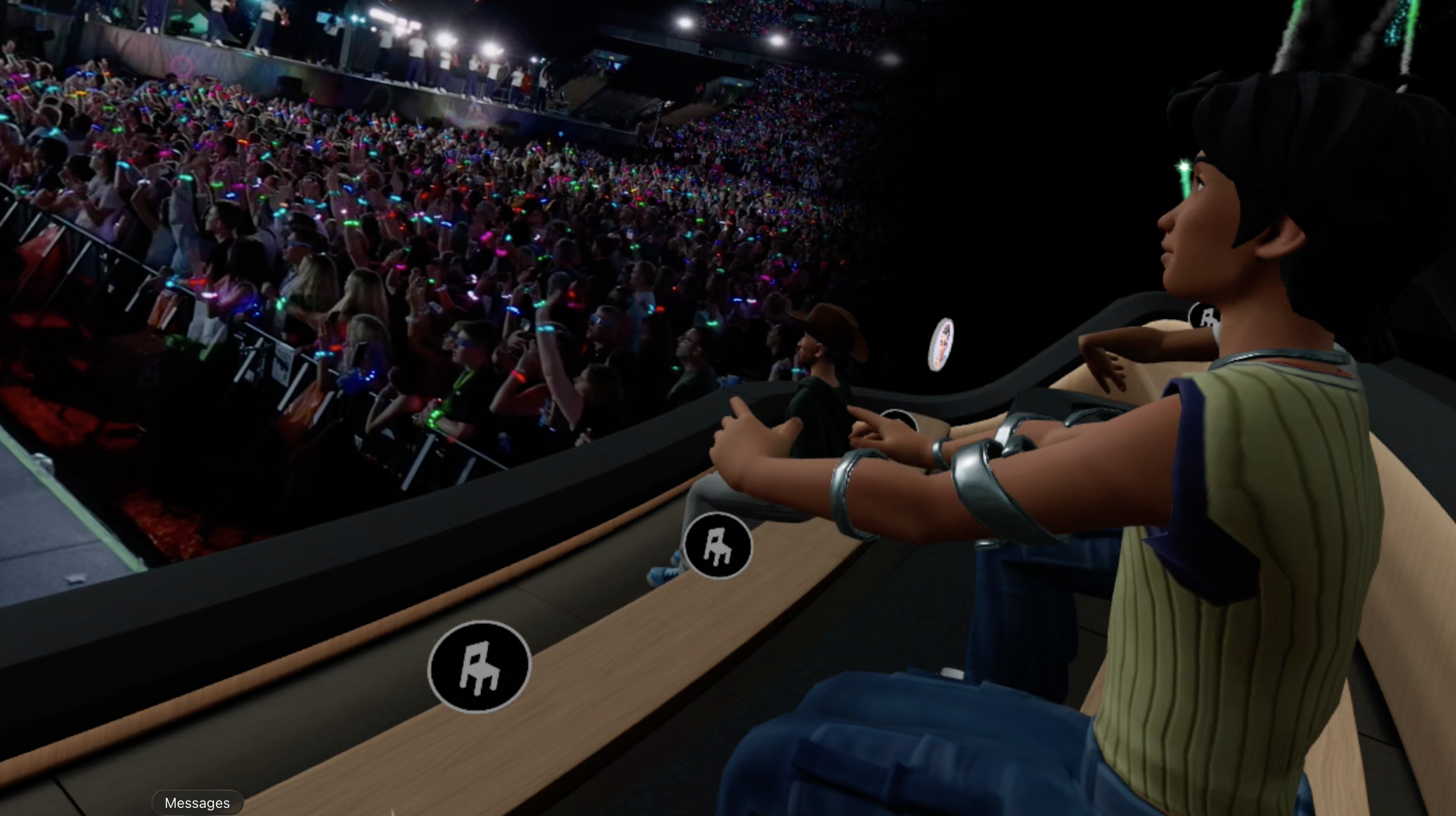
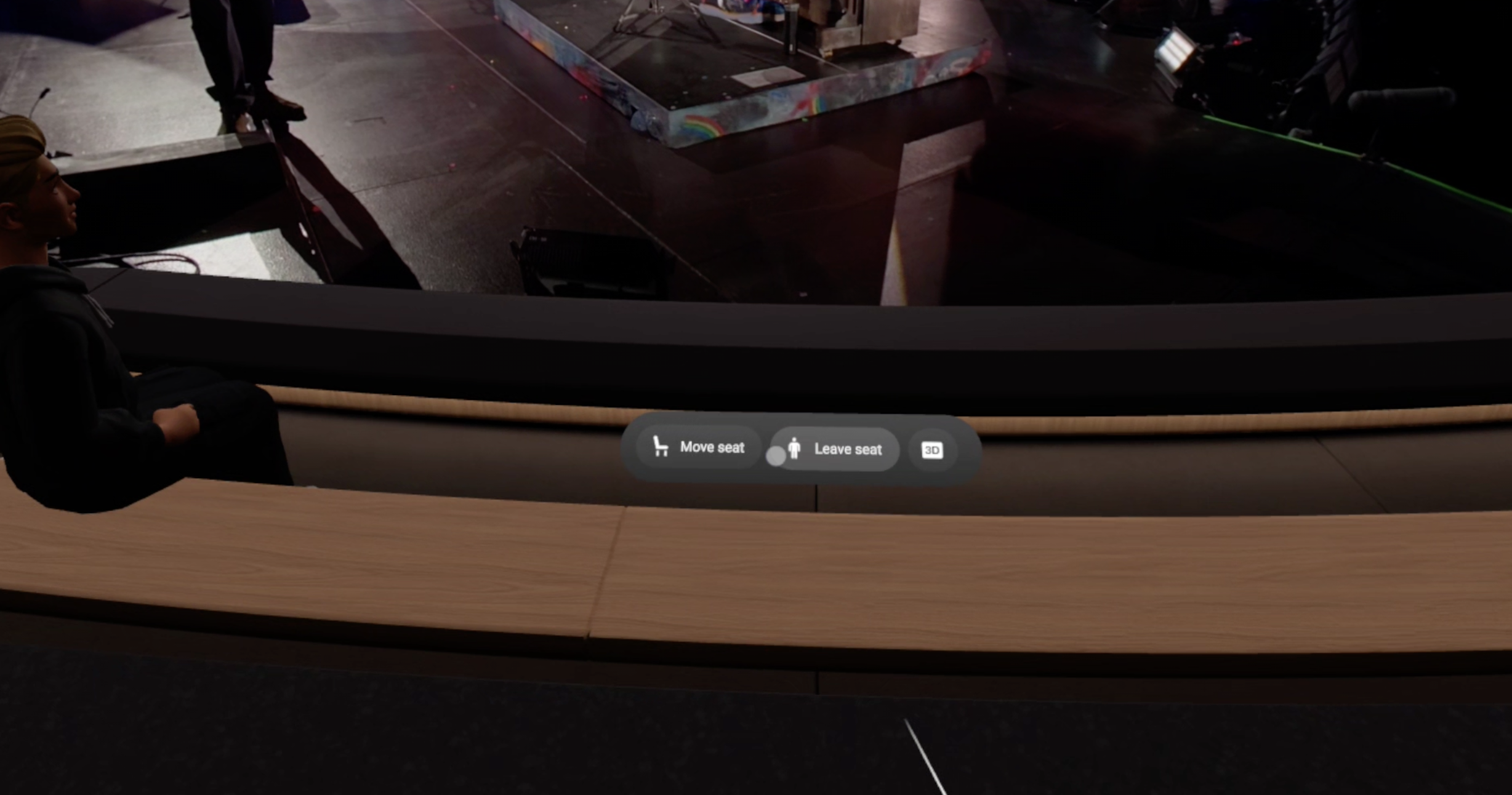
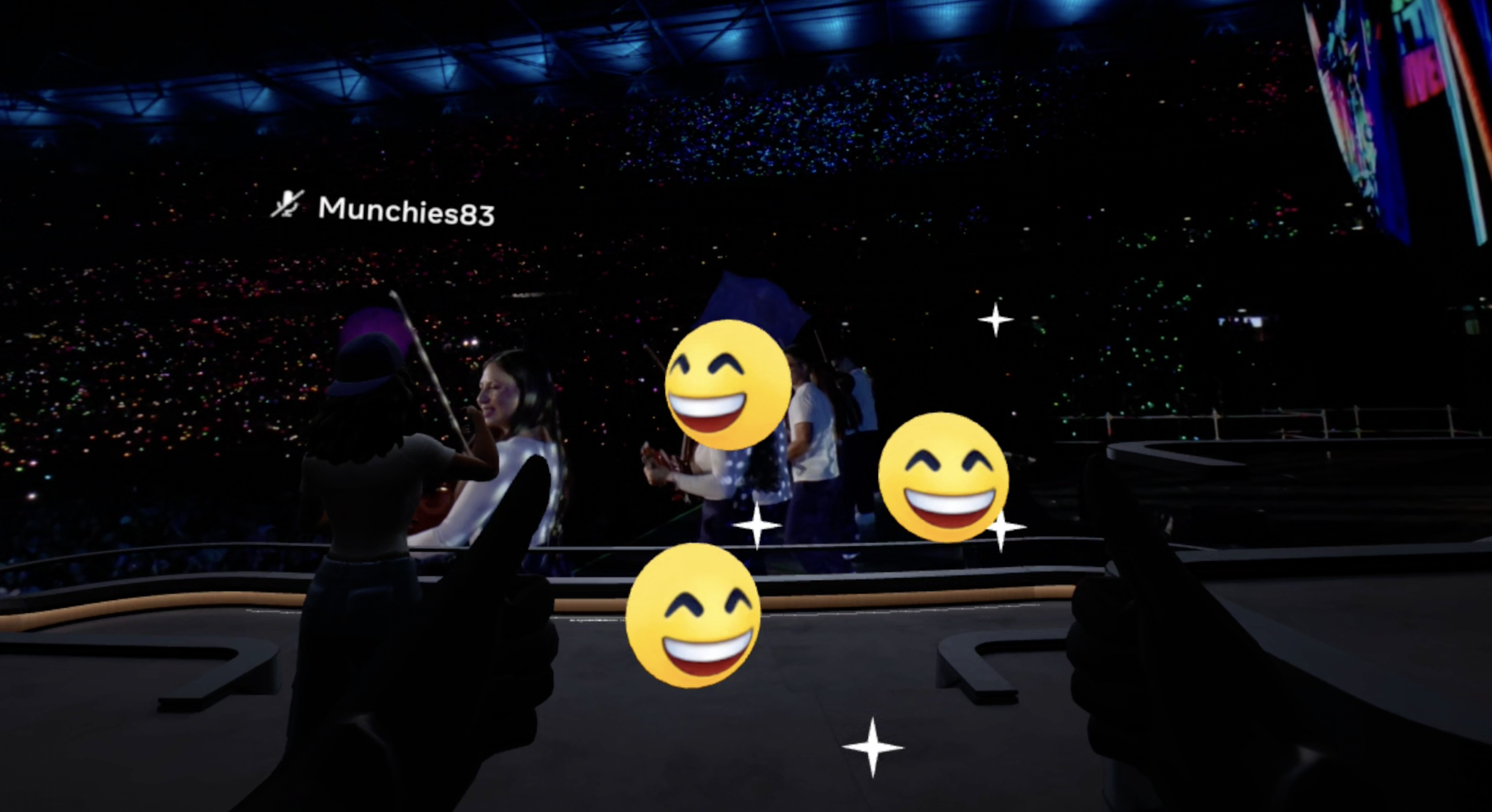
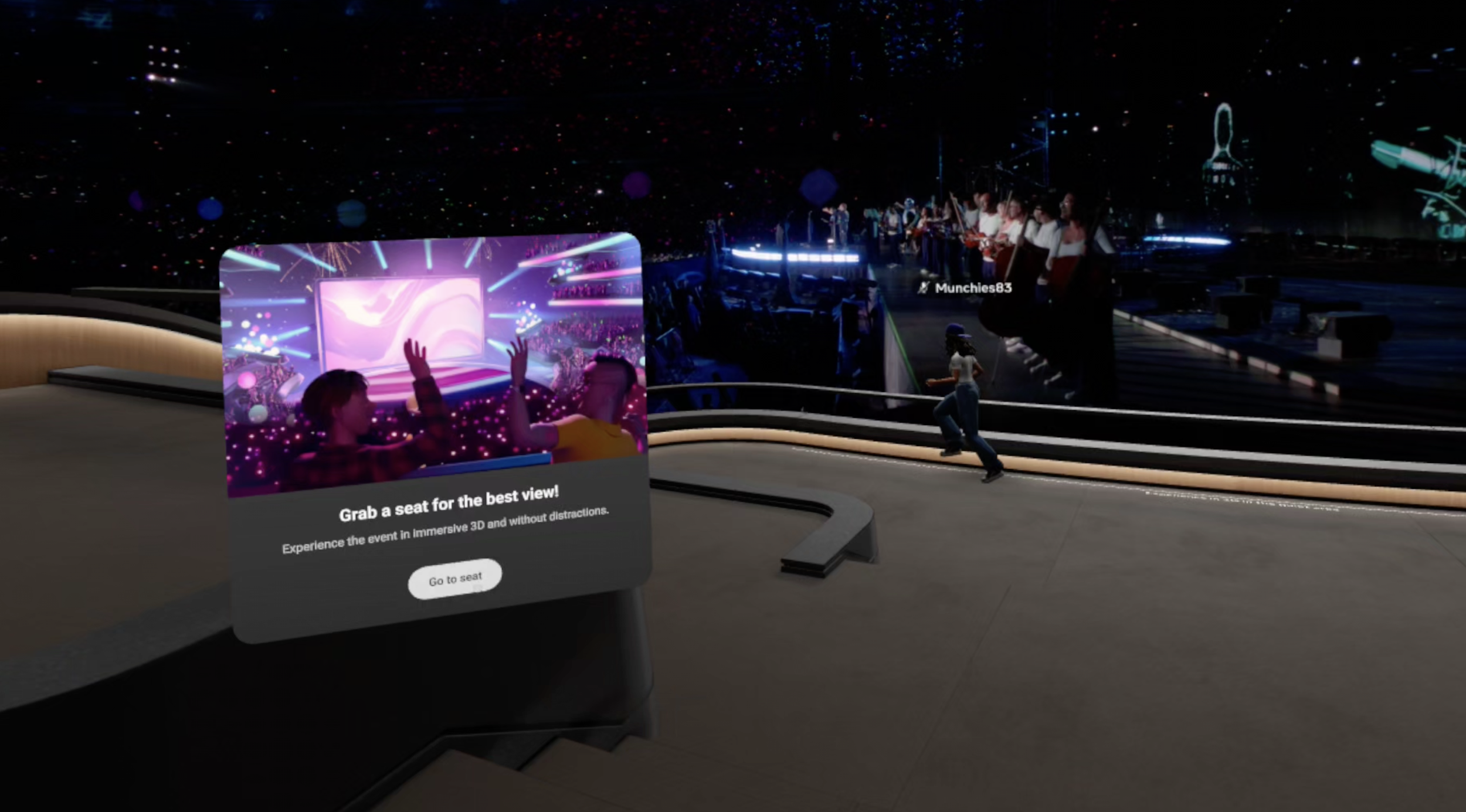
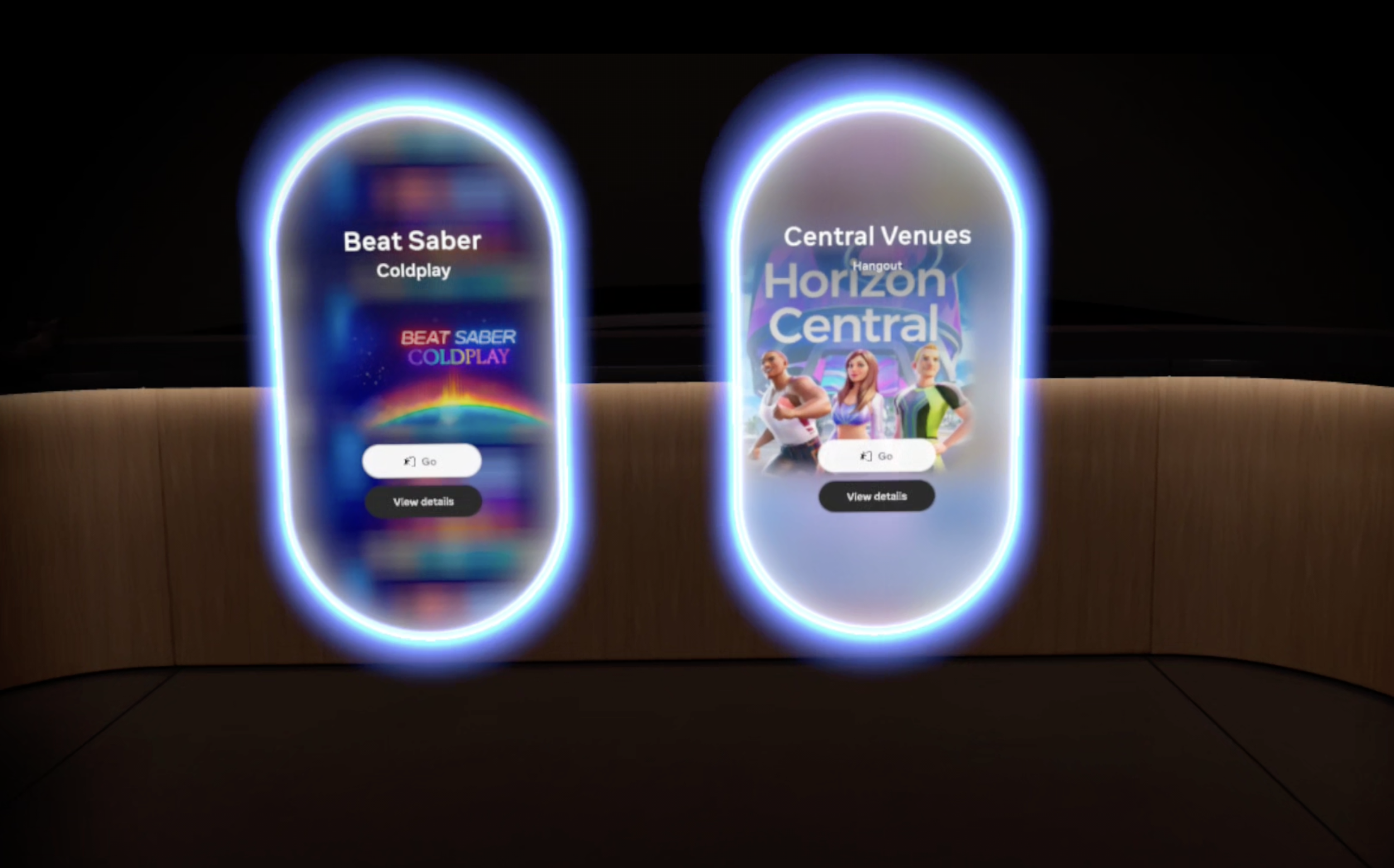
Co-presence, sociality, and spatial comfort
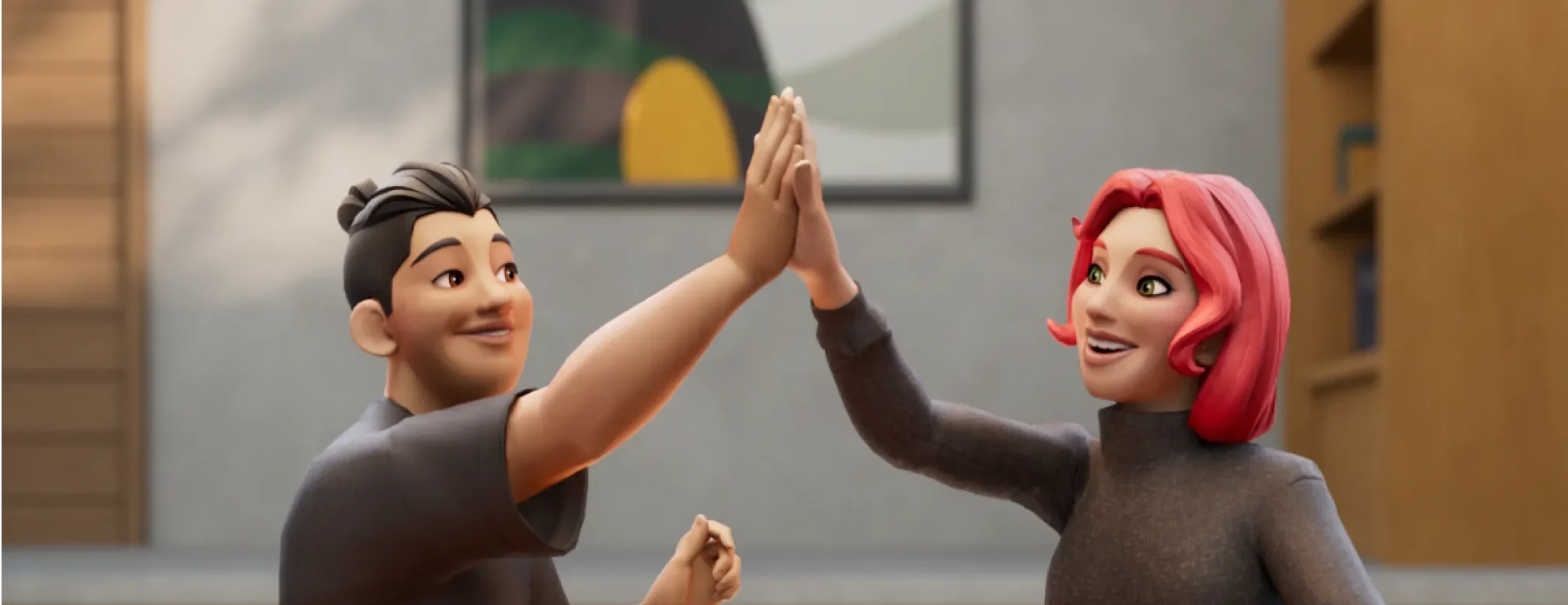
One of the most nuanced challenges in mixed reality is designing for shared presence — making people feel genuinely together in a space, even when they're physically apart and using entirely different hardware.
My work here focused on the interaction principles and spatial conventions that govern how users relate to each other in immersive environments: personal space, social signalling, movement, and comfort. This means designing not just for usability, but for the felt quality of being in a space with others — the difference between a room that feels inhabited and one that feels isolating.
Rapid prototyping in 3D/2D was essential here: these dynamics are impossible to evaluate on a flat screen, and the iteration cycles were tightly coupled to user testing in-headset.
My team’s work has been featured in Meta’s Connect conference in 2025 and is being experienced by millions of Quest and mobile users, with positive reviews.
Project 2/2 : Workrooms
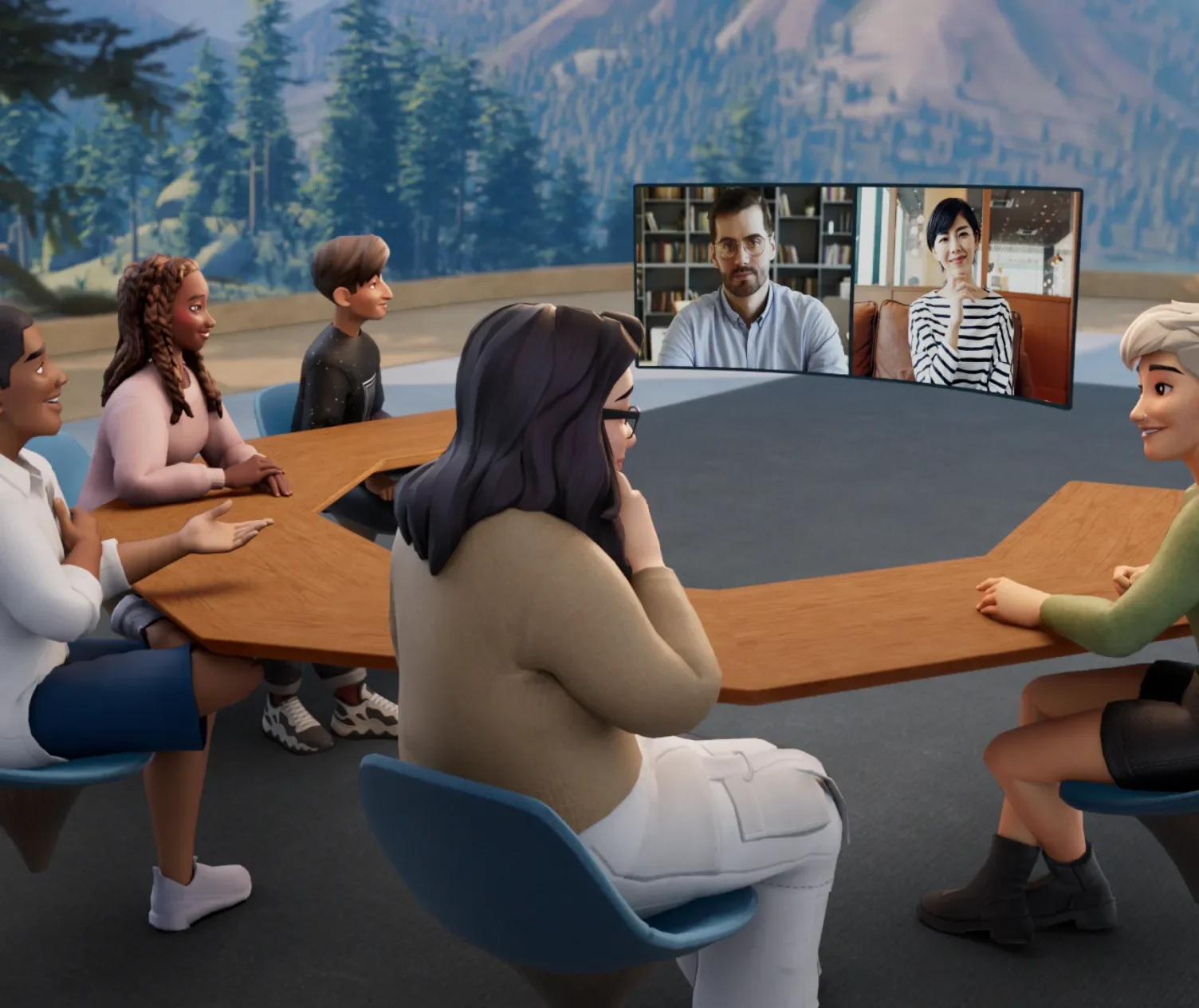
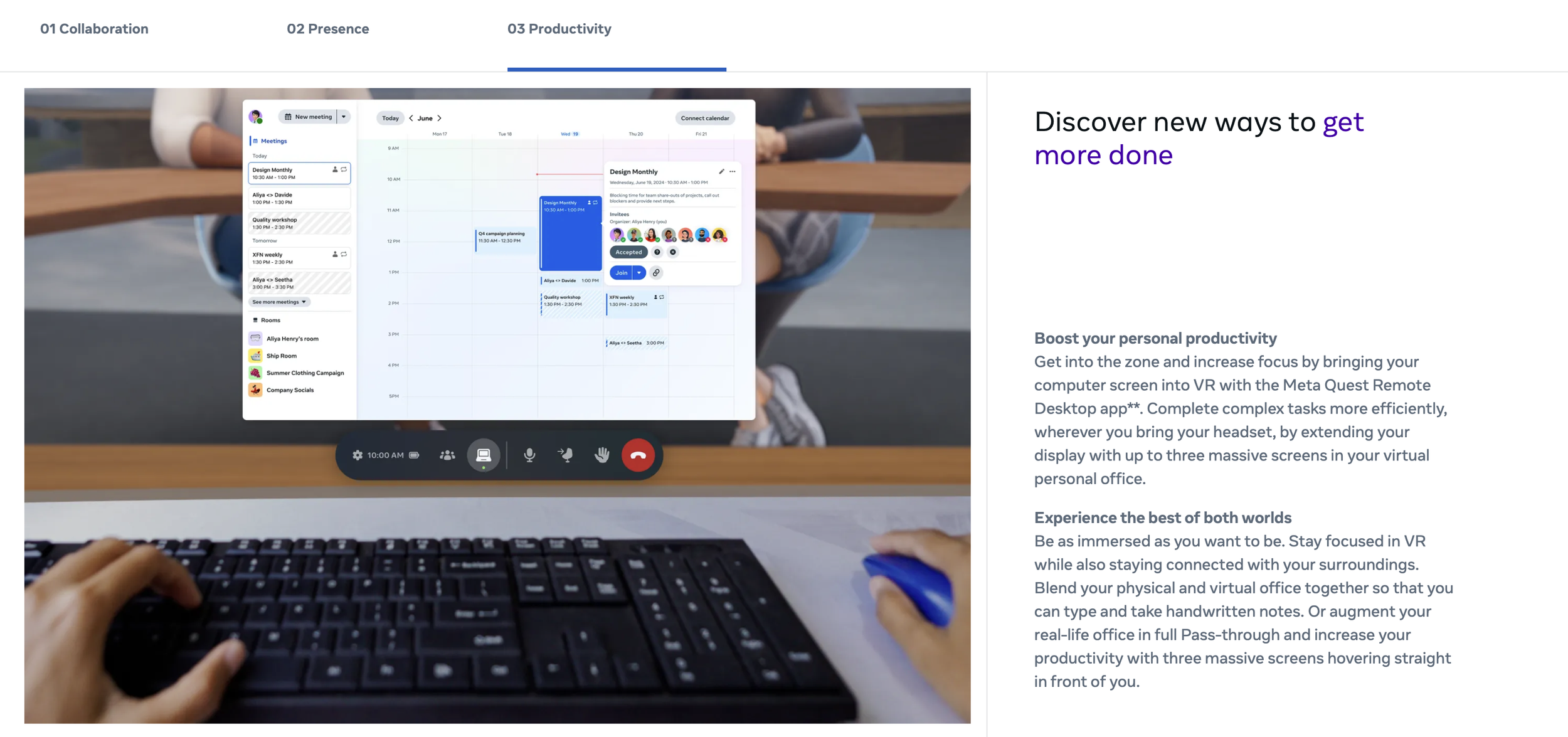
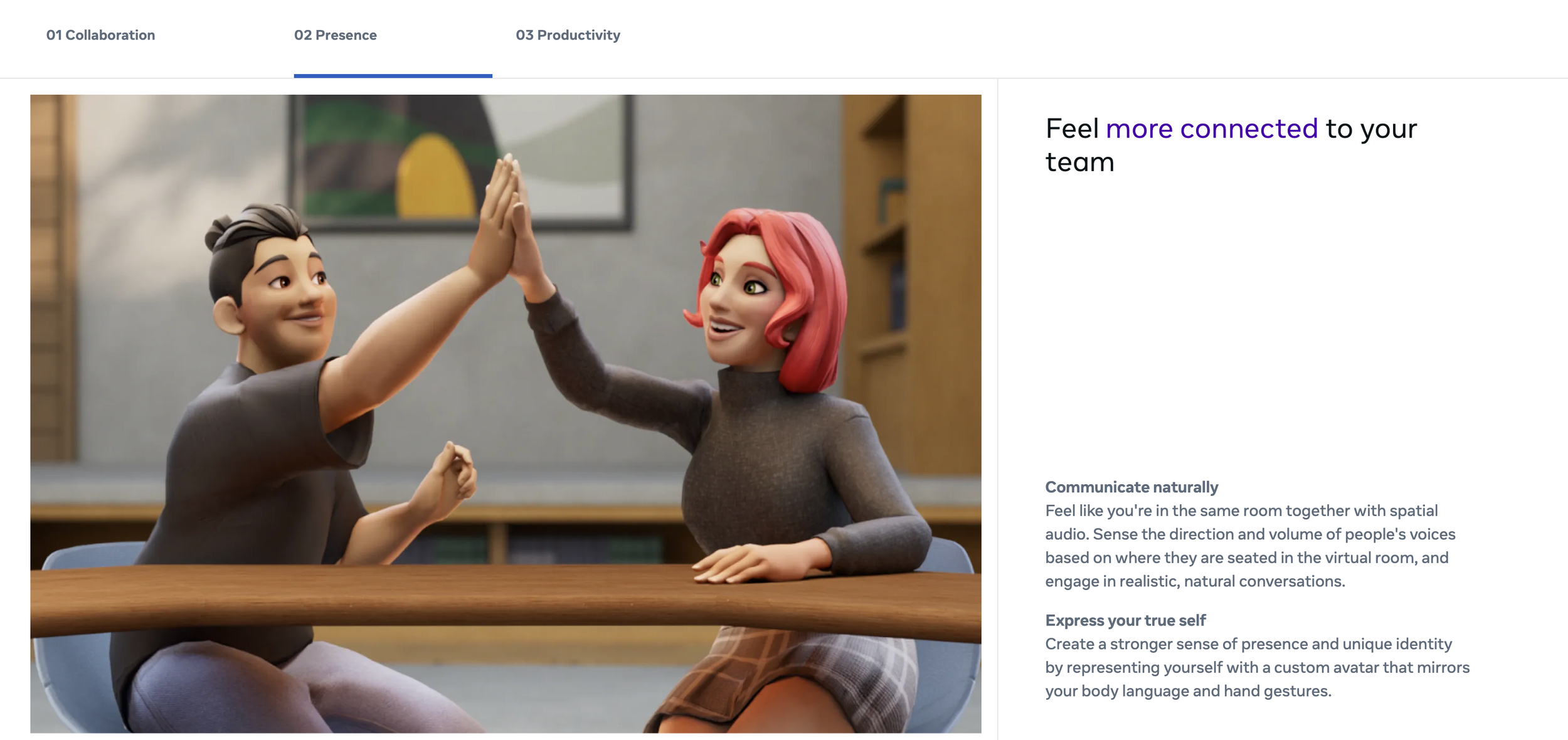
Workrooms was Meta's immersive virtual workspace for remote teams — available as both a free product and a B2B offering through Workplace, with integrations including Zoom and Microsoft Teams. Users could join via Quest headset or from a flat 2D screen, enabling cross-reality collaboration: brainstorming, presentations, and informal socialising across hardware contexts.
My focus was on software integration & the collaboration, co-presence, and productivity features that made cross-reality presence feel natural. The central design question was deceptively simple: how do you make someone in VR and someone on a laptop feel genuinely in the same room?
The project has since been discontinued, with Meta shifting focus toward consumer use cases. That pivot is itself instructive: it shaped how I think about the relationship between platform ambition and user adoption, and the role of design in navigating those tensions early.
Collaboration, Co-Presence and Productivity features, attempting to redefine remote work.